|
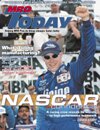 NASCAR confidential NASCAR confidential
MRO Today uncovers a racing team's secrets to high-performance teamwork
by Paul V. Arnold
What’s keeping your company from the winner’s circle?
Money? E-commerce? SAP?
Get your head out of the garage, Cooter. Have you been sniffing exhaust? Those other things are nice, but John Reiser says success may be right under your nose.
“Most manufacturing companies stink at teamwork,” he says.
Stink?
“Most companies, most plants, don’t have a winning atmosphere, and you can tie much of that to a lack of teamwork,” he says.
Companies love to promote the importance of department, plant and/or corporate teamwork with banners, hats and T-shirts, but Reiser believes many never push it past buzzword status. It then runs out of gas from a lack of communication, cooperation, commitment, respect, leadership, rewards . . . There are hundreds of reasons for failure, he reckons, and employees at all levels are at fault.
“If they only functioned like an auto racing team,” he says.
Reiser brings a unique perspective on that topic. He’s the chief executive officer of Triton Corp., an 80-employee firm in Hartford, Wis., that manufactures trailers. But he’s also co-owner of Reiser Enterprises, which fields a team in the NASCAR Busch Grand National Series.
Reiser’s No. 17 crew, with Winston Cup driver Matt Kenseth at the wheel, is acknowledged as one of the circuit’s best. The 17 car has posted 12 victories and 75 top-10 finishes since 1998.
“We all work together toward the common goal of winning the checkered flag,” says Reiser.
Reiser offers that strategy to managers and employees at his manufacturing business. Now it’s your turn. MRO Today spent a day at the track with Reiser, Kenseth and pit crew members John Weaver and Art Harris to learn their secrets of high-performance teamwork.
|
Reiser Enterprises No. 17
Busch Grand National team
Going into the 2002 racing season, the team consisted of:
Bobby Bakeeff
Shop duties: Mechanic/
suspension
Track duties: Rear-tire carrier
Art Harris
Shop duties: Fabricator
Track duties: Tire specialist,
gas man
Matt Kenseth
Duties: Driver
Steve Kenseth
Shop duties: Fabricator
Track duties: Front-tire carrier
John Reiser
Duties: Co-owner
Robbie Reiser
Duties: Co-owner
Dean Roseberry
Shop duties: Mechanic
Track duties: Rear-tire changer
Roy Ruggles
Shop duties: Truck driver
Track duties: Pit sign
Randy Slack
Shop duties: Motor specialist
Track duties: Pit support
Russ Strupp
Shop duties: Crew chief
Track duties: Jack man
John Weaver
Shop duties: Shock specialist
Track duties: Shock specialist
Keith Welty
Shop duties: Painter
Track duties: Front-tire carrier
|
More than hugs and beers
Screeeech. With a foot pressed on this story’s brakes, you’re thinking, is this teamwork stuff about giving high-fives or teary-eyed hugs to co-workers?
“You don’t necessarily have to like each other,” says Harris, a Reiser team tire specialist, gas man and fabricator.
Translation: Harris has never had to tell a teammate, “I love you, man.”
What is teamwork, then?
It’s not really about co-workers going out together after work for beers and bowling. Many call that “recreation” or “blowing off steam.”
It’s not confined to a small group or department. Teamwork is important for a maintenance department, purchasing department or the No. 2 red widget assembly line. But it’s just as important for linking these three seemingly separate groups.
“Teamwork is about effectively working together,” says Harris. “It’s when people come together and perform like a well-oiled machine.”
What’s your checkered flag?
Screeeech. Another tire-squealer. You’re thinking, winning the checkered flag? There are no flags or trophies in my line of work.
Reiser says, why not?
“If manufacturing could establish what a win, a checkered flag, is, the industry would be better off,” he says. “What’s a goal that could excite your people? What’s needed to push them toward that goal?”
The goal is up to you and your team, but it must be a clear, understandable and unified goal.
ISO certification, an improvement plan implementation or an award program may juice you up, but do others care? Survey the troops —the veterans, newbies and all those in between. If they’re equally juiced about it, there’s your checkered flag. If they couldn’t care less, start over and survey some more.
If and when you’ve found that common goal, involve employees at all levels in mapping out a plan to achieve it.
Money as motivator
Can money be a checkered flag? Incentives such as bonuses and performance-based raises can bring people together and support teamwork initiatives, but they can also crash and burn.
“Money is important, but it’s not the only thing,” Reiser says. “There has to be something more. The only reason why some people come to work —in manufacturing or any business — is to feed their family. So, you’ve got this big pot of people who don’t want to do what they’re doing. What do you think that does for teamwork?”
Bonuses, etc., supply a temporary boost, but the rush can quickly fade. Instead, you may want to try a little communication and consultation.
“It may come down to saying, ‘Man, you look miserable. You should really do something that you enjoy in life,’” he says.
It may mean the employee leaves the company to pursue a different career. Or, it could mean the employee admits deep interest in a different job on the team (the plant mechanic wants to work in the tool crib; or, the race team’s painter wants to work on body fabrication). If it’s a good employee, a shift or transfer may result in increased satisfaction and team performance.
If you’re a manager considering a bonus or raise as the checkered flag, make sure it’s a physical handout.
“Automatic payroll (direct deposits) is one of the dumbest things companies do,” he says. “The worker doesn’t bring home the bacon anymore. He doesn’t even get to touch the check. Payday becomes just another day. I want to go out there and say, ‘Joe, here’s your check for your hard work.’ Otherwise, there’s no personal satisfaction. It’s all eroded and camouflaged and covered up on the premise of being convenient.”
The same goes for non-monetary recognition. While less convenient for the manager, supplying a real pat on the back or a face-to-face thank you beats the heck out of an e-mail.
For the No. 17 crew, monetary rewards take the form of a bonus for top-three finishes.
“You can’t focus on the money, because you finish second, fifth and 10th a lot more than you finish first,” says Weaver, the team’s shock absorber specialist and a former General Motors/Delphi test engineer. “Don’t get me wrong. Bonuses are nice, but they aren’t the driver. They can’t be.”
Why not? Consider this. If a plant team’s initiative increases efficiency and performance, but not to the level to trigger bonuses, is the initiative a failure? If you focus on cash incentives and checks aren’t cut, workers will see it as failure and wasted effort. Spirits and teamwork suffer now and when future initiatives are rolled out.
The No. 17 crew strives to win each week during the season, but it won’t necessarily categorize a 14th-place finish as a failure.
“If we run well and feel we had good strategy and good pit stops, that’s a plus,” says Weaver. “We think we made gains toward the goal. That may help us win next time.”
Consider it continuous improvement, NASCAR style.
A checkered flag, then, should be the optimum, but not the only measure of success. Plant folks might understand that in terms of a Six Sigma program. Few if any companies pursuing Six Sigma will ever reach 3.4 defects per million. That’s the ultimate. But marked improvement from pre-initiative levels should spark joy. It’s progress toward the ultimate team goal.
“Strive for improvement and celebrate improvement,” says Reiser. “The day you’re willing to sit still and do nothing is the day your competition eats you up.”
And, it’s the day that teamwork takes a step backward.
The communications model
Whether it’s meetings, pats on the back or consultations over career choices, one thing is certain about the NASCAR teamwork model: Communication and contact is constant and consistent.
Race teams like the No. 17 crew get together on a regular basis to measure execution vs. the plan. They analyze past performance, pinpoint roadblocks and opportunities, and roll out new ideas. The leader’s job is to keep the team motivated, focused and on track.
During such meetings, everybody has a voice, a role and a stake in what happens. Everyone is on a level playing field. That carries over in preparations for the next race.
Before arriving at the next venue, Kenseth meets with crew chief Russ Strupp and crew members to discuss car setups for that particular track.
“We take two or three options that Matt provides, two or three options that the team provides, and have those options available to go on the car,” says Reiser.
At the track, Kenseth runs practice laps to test each of the different setup options. After each test, he stops in the pits and communicates to Strupp what he saw, felt and heard. The crew chief then passes on that information to the team or individual crew members.
The same line of communication is used on race day.
“Basically, I’m the only link between them and what the car is doing on the track,” says Kenseth. “Ihave to tell Russ how it’s going and what I think it needs. Together, we decide what we need to do. The crew chief relays that to the people who will be changing tires and making adjustments on pit road.”
Setting up your race team
Carry the 17 team’s strategy over to your plant team. An opportunity for improvement could be in how maintenance and production work together to communicate and maximize machinery performance.
If you’re a machine operator, you’re the driver. Nobody knows how the machine performs on race day (“the work shift”) like you. Your team role should include:
1) Equipment inspection — listening, feeling, seeing, becoming one with the machine.
2) Driving the machine.
3) Minor adjustments —doing tasks within your control to maximize machine performance.
4) Communication —passing on information, warning signs, etc., to the line manager (crew chief) or maintenance workers (pit crew).
If you’re a line manager/crew chief, you better make sure your driver has everything he or she needs to win the race. That includes training, raw materials, safety equipment, repair and operations support, and a feedback loop to you.
If you’re the maintenance worker/pit crew member, you maximize the performance of that race car (production machinery). Get there by listening to the driver and incorporating proactive maintenance methods:
1) Preventive maintenance —visual inspections, proper lubrication, proactive changeouts, belt monitoring.
2) Predictive maintenance —vibration analysis, oil analysis, infrared, laser alignment, etc.
Maintenance work isn’t all technical. Machine cleanliness is important, too. It all impacts attitude, performance and safety.
If you’re in the tool crib, you’re also a crew member. If the driver’s machine is down on race day and a spare part is unavailable, the team is toast. The crib should also be well-organized to allow less searching and less time lost when the machine is in the pits. Even on race day, the 17 team’s pit garage is tidy and organized. There’s a place for everything and everything is in its place.
Finally, safety managers are team members, too. If the machine isn’t safe, the safety equipment is inappropriate or there are ergonomic issues, the driver isn’t going to be around to take that machine over the finish line.
The bottom line? Everyone needs to know his or her role and how it fits into the big picture.
“A lot of people think success comes down to equipment and driver,” says Weaver. “That’s a big part of it, but team chemistry is a big part, as well. You have to have everyone pulling in the same direction. You need people who are upbeat and have a good attitude.”
Weaver says those are big reasons why the group hardly ever loses a team member to a rival team.
“It’s hard to build teamwork when the personnel is constantly changing,” he says. “We haven’t had that problem.”
Skilled in teamwork
Weaver focuses on shocks, Harris on tires and gasoline, Reiser on finances, and Kenseth on driving fast. Everyone has specific skills and individualized roles on the No. 17 team. While those are important, all say teamwork means knowing when to go beyond your own job list.
“When you’re done with your stuff, see what you can do to help someone else out,” says Reiser. “In manufacturing, it should be, ‘Joe, I’ll give you a hand here so we can get this done.’ Instead, it’s usually, ‘My job is done. I can relax.’”
To avoid focusing on individual tasks, pit crew members receive cross-training during the off-season.
Weaver says his training allows him to assist suspension specialist Bobby Bakeeff when he’s finished building and testing shocks.
“We know the whole car instead of just one area,” says Harris.
Any questions?
Can these NASCAR-based teamwork strategies work for you?
Give them a test drive. But Reiser and Kenseth advise patience. Team-work doesn’t happen overnight.
“It takes a good year and a half for a race team to gel and start coming together as a unit,” says Reiser.
Adds Kenseth, “Sometimes it takes longer for everyone to totally understand their job and what they need to do. But there are times when the whole group clicks right away.”
What’s your team’s checkered flag? Is teamwork your key to the winner’s circle? Answer those questions, and get your team back on track.
This article appeared in the April/May 2002 issue of MRO Today magazine. Copyright, 2002.
Back to top
Back to Cover stories archives
|