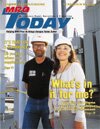
 What's in it for me? What's in it for me?
Six Sigma targets the bottom line, but what does it mean for employees? At Dow Chemical, Six Sigma success is tied to worker buy-in and involvement.
by
The Six Sigma world.
Master blackbelts, blackbelts, greenbelts, champions. DPMO, DPPM. SPC, Pareto charts, Cpk. MAIC, DMAIC, DMADV, LMAICL. Failure modes, Sigma shift.
"STOP! Six Sigma, huh? Ditch the buzzwords. Bottom line it. Whats in it for me?"
Looking for answers
When manufacturing giant Dow Chemical announced Sept. 29, 1999 the launch of a corporate-wide program to incorporate the Six Sigma quality/continuous improvement methodology into its 15 global businesses, the reaction from its 40,000 employees wasnt exactly elation, sarcasm or anger. It was more like raised eyebrows followed by the word "and," as in "And this would . . ."
OK, the company is committing more than $100 million per year to this Sigma thing. Whats this mean? More work? Bonus checks? A hiring freeze? A raise? Promotions? Layoffs? What?
"Most people werent questioning the companys decision," recalls Jackie Skipper, a machinist in the regulator shop at Dow Chemicals massive, 80-plant manufacturing site in Freeport, Texas. "However, they were asking, What impact does this have on me?"
A closer look
at Six Sigma
What is it?:
Many say Six Sigma is a statistics-based methodology that aims to achieve perfection in every company process and product. Others say the concept goes much deeper.
Mikel Harry, a co-founder of the methodology in the 1980s while at Motorola, says, "Ninety percent of Six Sigma doesnt have a damn thing to do with statistics. Six Sigma is about measurement and about new questions never asked before. Those new measurements drive, create new questions. In turn, those questions drive new behavior. As new questions emerge, ambiguity diminishes. As ambiguity diminishes, direction becomes clear. Only when direction becomes clear can people be mobilized toward a common action."
Whats a Sigma?:
Sigma is a letter of the Greek alphabet used as a symbol by statisticians to mark a bell curve showing the likelihood that a process will deviate from the norm. The narrow definition of Six Sigma is 3.4 defects per 1 million opportunities, or 99.9997 percent perfect. Today, most companies operate at Three Sigma, which allows 66,803 defects per million (93.32 percent perfect).
Does Six Sigma differ from other quality programs?:
Richard Ellis, a blackbelt (full-time project team leader) at Dow Chemicals complex in Freeport, Texas, puts it this way:
"Dow tries to communicate to people that this isnt new and unlike everything weve done before. What they say is, Six Sigma takes a large percentage of the other initiatives quality circles, quality teams, etc. and puts them into a formalized, sustainable process."
Want to learn more?: Good sources of information on Six Sigma are available on the Internet. They include:
www.isixsigma.com
www.pyzdek.com
www.ge.com/sixsigma/
www.6-sigma.com
www.sixsigmaqualtec.com
http://mumotorola.com
|
Obtaining acceptance and buy-in from employees for any change initiative is imperative and extremely difficult. But a change initiative involving Six Sigma is even more so, given its high price tag and nebulous nature. (For a Six Sigma primer, see the sidebar. Or, search mrotoday.com.)
Deloitte Consultings Lean Enterprise Practice says a Six Sigma program fails to significantly impact a companys balance sheet or share price 9 out of 10 times. A major factor, it says, is the inability of such companies to motivate and win over employees.
Dow, a firm with annual sales surpassing $28 billion, knew the facts. Thats why it spent the final months of 1999 hammering home the importance of the average worker in its Six Sigma initiative.
"We will use Six Sigma to reduce employee frustration over rework, broken processes and poor quality," said chairman Bill Stavropoulos.
"Employees will be rewarded through more satisfying work, a greater sense of value to the company, and more rewarding and competitive personal and professional growth," said Kathleen Bader, corporate vice president of quality and business excellence.
Dow unveiled plans to have 90 percent of employees serve on at least one successful Six Sigma project team by 2003. It stated Six Sigma certification (achieved by serving as a team member or leader) would be a prerequisite for most promotions by 2005.
To drive cultural change, said Bader, "They need to see whats in it for them."
Is the average Dow employee sold on Six Sigma? Nineteen months after the launch and feel-good quotes, many plant workers still have a wait-and-see attitude. Some think its the flavor of the day. Some simply havent been exposed to it.
But the corps of non-believers continually shrinks.
A major gamble
Six Sigma is a work in progress at all Dow sites. That is especially true at the Freeport complex, also known as Texas Operations.
Six Sigma project teams have targeted some pressing production, maintenance and supply chain problems. There have been notable successes, and some failures. Employees exposed to projects, even failed ones, are now among the programs more fervent fans.
Still, as most management and blue-collar employees explain, only half of the Texas sites 5,000 workers are truly on board. That figure is bound to swing, one way or another, in the next few weeks.
Six Sigma leadership in Freeport rolled the dice last summer by laying out plans for a highly visible project. Want people talking about Six Sigma? Create a project addressing overtime.
"The immediate reaction was fear that theyd come in and completely shut down overtime," says Skipper. "Well, a lot of people enjoy OT. Its part of their lives."
Diana Miles, a master blackbelt (highest Six Sigma certification level), says its common practice for Freeport workers to log "at least 20 hours of overtime a week." Skipper says he works 12 hours of overtime a week.
A blackbelt (one notch below master blackbelt) normally runs a project team. However, Miles took the reins of this high-profile, site-wide project. Who was the first person inquiring about a spot on her six-person project team? Skipper, the blue-collar worker, overtime fan and, coincidentally, local president of the International Association of Machinists and Aerospace Workers union.
The IAM is one of four unions at Texas Operations.
"I wanted to see it first-hand," he says. "I didnt want someone else reporting to me that theyre doing away with overtime. I wanted it explained to me so I could take it back to my members. I wanted to make sure decisions came from the project (rather than a management edict). And, I wanted it implemented correctly."
Shaping the solution
Miles picked Skipper. But those expecting a chemistry problem between Six Sigma and union leadership were off base. Skippers data (collected by interviewing dozens of production managers and hourly workers), as well as his insights and ideas, helped shape the project teams battle plan.
In early March, the project was in the improve phase, the third in a series of four steps Dow teams follow. Collectively known as MAIC (measure, analyze, improve and control), they guide a team toward the ultimate goal a correct and lasting solution that impacts the bottom line by more than $250,000 in a 12-month span.
The once-feared project is now about overtime optimization.
"As a team, weve resolved that there is some necessary OT when you have critical equipment break down, when you have a spill," says Miles. "What were focusing on is when it isnt necessary for non-critical work."
The plans key points?
" Overtime is fine, as long as its necessary.
" Overtime reductions are aimed at eliminating frivolous usage.
" Employees (hourly workers and department managers) must be accountable for overtime usage.
The project seeks a simple 2 to 5 percent reduction in overtime. "Even at 2 percent, the cost savings will be tremendous," says Miles.
Skipper says workers are reserving final judgment until the plan is implemented in April.
"If implemented correctly, it will be seen as a success by all," he says.
Whats in it for Dow employees? Continued overtime and, perhaps, a little help. If OT is deemed a workload problem, hiring is a solution. There is also a financial benefit. Union employees are eligible for cash awards created by Six Sigma cost savings.
The value of valves
Many outsiders view Six Sigma as a cold, statistical tool. Stats are important, but it can also get down to the personal level.
George Morgan is a veteran mechanical technician and, as a result, knows more about block valves than practically anyone at Texas Operations.
That knowledge wasnt fully utilized, though, by managers and workers in production, maintenance and purchasing.
"To a great extent, I wasnt listened to. Or, I was listened to, but somebody elses ideas held more weight," he says.
For years, Morgan knew Dow Chemical spent too much money on block valves. Maintenance workers frequently requisitioned new valves for changeouts instead of using items Morgan repaired or refurbished as part of an asset recovery program.
"A valve wasnt seen as an asset that could be reused," he says.
A large percentage of employees saw these MRO products as a disposable commodity.
In the past, valve recovery functioned on word of mouth and ties Morgan had with veteran maintenance foremen. When the old guard retired, fresh-faced replacements didnt get the message. As a result, less than half of all block valves were sent for repair and redeployment.
Management acknowledged the programs weakness, and blackbelt Maury Pate received the task of leading a Six Sigma project team aimed at increasing valve recovery.
"I knew zero about the recovery process before I started the project," says Pate.
Therefore, securing Morgan for the six-person team was a priority.
Morgans first impression of Six Sigma? "Sounds like something thats going to take time away from my job," he recalls saying.
Peeling the onion
After receiving instruction on Six Sigma principles, Morgan and other team members collected and analyzed reams of data and "began to peel away the onion."
"Instead of asking why one time, you peel away the layers and get to the root cause," he says.
According to Pate, the team identified three issues keeping valves from the recovery program.
1) Accountability. "No one was assigned a role of being responsible for that specific task."
2) A lack of knowledge and promotion. "The recovery program went through a pretty good advertisement phase in 1997 and 98, but in the following years, people changed roles or retired."
3) No incentives in compliance. "The easiest thing to do was keep it there, clean it and not send it out because it required a little paperwork. It stayed put or was tossed."
The projects solution tied valve expenditures to individual cost center budgets. It also increased communication through education and regular reports chronicling cost center compliance.
"In the past, nobody outside my department knew what the savings were," says Morgan. "Now everybody knows. Each month, they see the numbers and dollar savings."
The project sought a 90 percent return rate on the sites 2,300 block valves. In practice, it surpassed 100 percent, meaning valves once thought lost were pulled from desks, closets and lockers and returned for further usage.
What did Morgan get from his Six Sigma experience? Respect.
"This type of empowerment gets people to listen to you more," he says. "That gives you clout, and that gives you more of a voice."
Altering behaviors
Dow Chemical employees directly or indirectly exposed to Six Sigma are seeing some benefits. Projects are addressing nagging problems, inefficient practices and safety issues. Those taking active roles on teams talk about the feeling of empowerment and having a role in change.
Blackbelts and department supervisors speak of the change taking place in these workers.
"Dow wants employees to understand the tools and use them in their daily job, not just when they are on a Six Sigma team," says blackbelt Dave Jasper.
That requires a change in behavior.
"We have a tradition of being very action-oriented," says Global Maintenance Resource Center leader Terry Leigh. "So when we see a problem, people jump at it. As soon as we identify a solution, bang, were in there. Well, this methodology teaches you, Hold up. Lets take a while to look at the data here. Lets study it a little more closely before we fire off."
A quick fix isnt necessarily the best or lasting solution.
"When you look at second- or third-pass data, the picture becomes very clear," says Leigh.
Such change makes employees more solution oriented, proficient, dependable and valuable.
What do a growing number of Dow employees say Six Sigma provides them?
"Were taking ownership of the plant and our future," says process operator Gene Saulsman. "Thats a good position to be in."
To learn more about Dow Six Sigma, click on:
"Smith gets his kicks as greenbelt"
This article appeared in the April/May 2001 issue of MRO Today magazine. Copyright, 2001.
Back to top
Back to Cover stories archives
|